We will send you an email to reset your password.



Recent Posts


01.
May
With so much information out there about skin treatments, it’s no wonder clients often feel unsure about which one is right for them. Two of the most common options we’re asked about are Dermapen skin needling and fractional laser resurfacing, and the honest answer is that both are genuinely effective, they just get there in different ways.
At Cronulla Skin Sanctuary, we offer both Dermapen Skin Needling and UltraClear® fractional laser resurfacing, and we regularly combine or customise the two to suit an individual’s skin. This guide is here to help you understand the real difference, not to steer you toward one over the other.
What Do Skin Needling and Laser Resurfacing Have in Common?
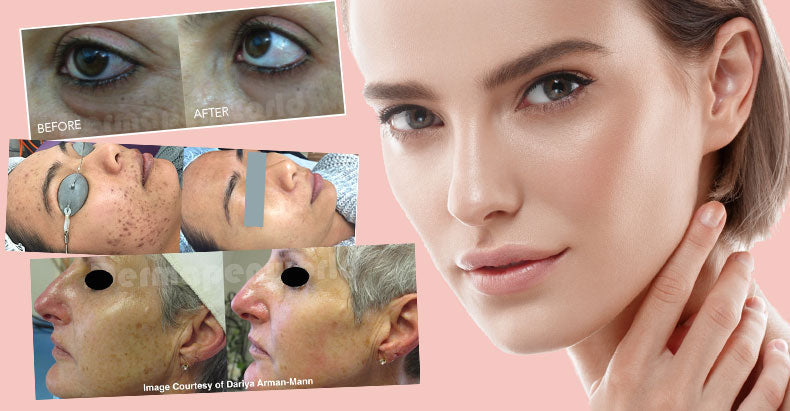
Both treatments work on the same basic principle: creating controlled, microscopic injury to the skin to trigger its natural healing and collagen building response. Both are commonly used for acne scarring, enlarged pores, pigmentation, uneven texture and general skin rejuvenation.
Where they differ is in how that micro injury is created, and that difference shapes everything else: sensation, downtime, and the kind of result each is best suited to.
Dermapen Skin Needling: How It Works
Dermapen uses fine, sterile needles to create precise micro channels in the skin at a controlled depth, without any heat. This is a mechanical process, and it’s generally well tolerated, with most clients describing a mild warming or light scratching sensation.
Because there’s no heat involved, downtime tends to be shorter and more predictable. Redness and sensitivity, often compared to mild sunburn, are common for the first day or two, sometimes with light flaking as the skin renews itself. Most people are comfortable returning to normal activities the next day.
UltraClear Fractional Laser Resurfacing: How It Works
UltraClear works differently. It uses light energy, delivered through a cold fibre laser technology, to create controlled micro columns of treated tissue in the skin. Because it’s light based rather than mechanical, the depth and intensity can be adjusted more precisely, which is what allows it to range from a gentle refresh through to a genuinely deep resurfacing treatment, depending on the mode selected.
This adjustability is the real advantage of laser: for texture irregularities, deeper acne scarring, or more advanced sun damage, a laser can typically deliver a more intensive result in fewer sessions than needling alone. The trade off is that the more intensive laser settings involve more downtime, with light exfoliation typically beginning three to five days after treatment.
So, Which One Should You Choose?
There isn’t a single right answer, it genuinely comes down to what you’re treating and how much downtime you can work with.
Fractional laser resurfacing tends to be the better fit when: - You have noticeable texture irregularities, deeper acne scarring, or more advanced sun damage - You want a more intensive result and are comfortable with a few days of visible healing - You’d prefer fewer, more concentrated sessions over a longer course
Skin needling tends to be the better fit when: - You want to improve texture, tone or fine lines with minimal disruption to your routine - Recovery time and downtime are a bigger priority for you than treatment intensity - You’re looking for a treatment that’s gentle enough for regular, ongoing maintenance
For many clients, it really is a personal preference between a faster, more intensive result and a gentler, lower downtime process. Neither is more favoured than the other, they’re simply different tools suited to different goals and different tolerances for downtime.
Why We Often Combine the Two
Because skin needling and fractional laser create change through different mechanisms, they can complement each other well. It’s common for us to build a plan that uses needling for maintenance and skin quality, with laser sessions layered in when a client wants a more corrective result for a specific concern, like scarring or deeper sun damage.
This is exactly why we start with a proper skin consultation rather than recommending one treatment over the other by default. What suits your skin, your goals and your lifestyle is genuinely individual.
Frequently Asked Questions
Is skin needling or laser resurfacing better for acne scarring? Both can improve acne scarring. Laser resurfacing, such as UltraClear, is often chosen for deeper or more textured scarring because its intensity can be adjusted for a more corrective result. Skin needling is a strong option for milder scarring or for clients who want a gentler, lower-downtime approach, and the two are often combined for the best overall result.
Which has less downtime, Dermapen or laser? Dermapen skin needling generally has shorter, more predictable downtime, typically a day or two of redness and sensitivity. UltraClear laser downtime varies by mode, ranging from minimal (the gentler 3D MIRACL mode) to seven days of light exfoliation for the more intensive modes.
Can skin needling and laser resurfacing be combined? Yes. Many clients use skin needling for regular skin maintenance and add laser sessions for more targeted, corrective concerns. A consultation is the best way to work out a combined plan suited to your skin.
Is laser resurfacing safe for all skin tones? Suitability depends on the specific laser and individual skin assessment. UltraClear’s cold fibre technology and adjustable settings are designed to suit a wide range of skin types, though your practitioner will always assess your skin during a consultation before recommending settings.
How many sessions will I need? This depends on the treatment and your goals. Skin needling courses are commonly recommended in sets of three to six sessions. UltraClear courses vary by mode, generally two to four sessions for corrective modes, and as few as one to three for the most intensive mode.
Not Sure Which Treatment Is Right for You?
The best way to know whether skin needling, laser resurfacing, or a combination of both suits your skin is a proper consultation, not guesswork.
Explore Dermapen Skin Needling or Explore UltraClear® Laser
Still deciding? Get in touch with our team and we’ll help you work out the right starting point for your skin.